











A year and a half into Nicolaus Anderson’s nursing studies at CUC, something wasn’t clicking for him.
At the time, CUC nursing students would go through what was called the “Two Plus Two” program where two years of classes were taught in science, math, and other general education classes by CUC faculty and two additional years were done through a neighboring university or college, like the now-closed Oak Point University. Over 1,000 nursing graduates from CUC went through the Two Plus Two program over 40 years.
“I wasn’t getting what I wanted,” Anderson said. “Academically, socially, it wasn’t Concordia – and there was a lot of issues with that.” While he initially chose CUC for the tight-knit community and Christ-centered atmosphere, with almost all of his classes taken at a completely different school, Anderson was unhappy in the situation.
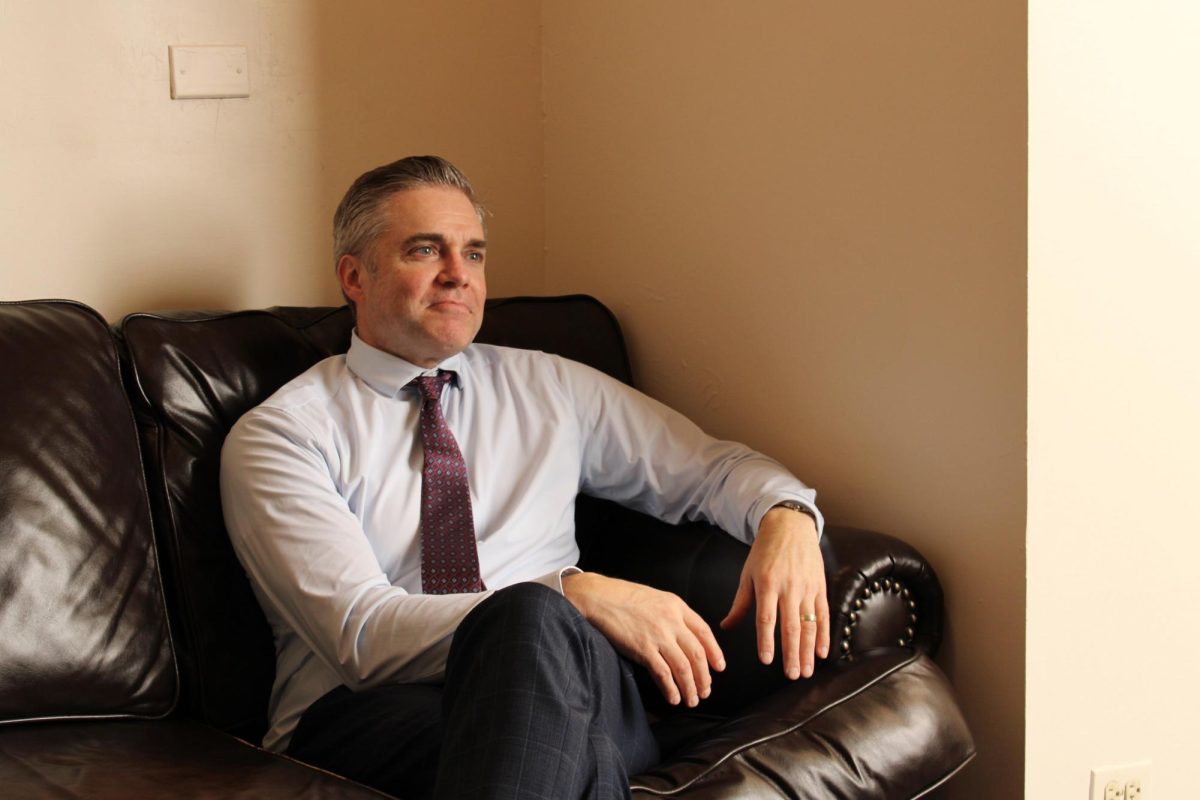
That all changed when he ran into the newly hired CUC director of nursing Kristen Bayer in late 2022. They discussed Anderson’s struggles with the current nursing program while Bayer introduced him to the new four-year program she was working to bring to CUC.
“I met her and started working with her,” Anderson said. “Even while I was taking classes at this other school, she was helping me study, you know, tutoring me and all that. She reminded me of what I wanted from school and why I chose Concordia in the first place.”
Bayer’s vision for this new four-year program was unlike what CUC had seen before in the nursing program. Her goal was to focus on that same reason Anderson chose CUC to begin with – consistency, community, and faith.
She wanted the experience of a nursing student to feel uniquely Concordia by looking at nursing through the lens of a vocation used to serve one’s neighbor.
“Bringing our faith into the classroom is really important,” Bayer said. “And really leaning into faculty who are strong in their faith, who have been nurses for a long time, who have a willingness and a desire to really explore that part of what makes the job so much a vocation with our students.”
Anderson said the nursing faculty were important in his experience with the new program.
“They were really there to help us through it the whole way, and gave us what we needed to be successful,” Anderson said. “They really wanted the best out of each and every one of us, so I felt like they were personally invested in us. We weren’t just a success rate to pass our tests and move on.”
From checking in on students regularly to standing beside them on their first clinical while they perform CPR on real patients, each member of the nursing faculty was chosen specifically because of their love of the vocation and care for students.
“The faculty are not just a teacher in a classroom,” Anderson said. “I’d always stop by their offices [and talk] about class, about life, about this, about that. You know, they’re always there for us – for pretty much anything.”
In addition to the faculty being chosen very specifically, the students’ schedules, the tools they use, and the spaces where they work are central to Bayer’s vision for the nursing program.
In contrast to most nursing programs starting clinical rotations at nearby hospitals the third or fourth year of school, Bayer wanted students’ schedules to mirror their interests soon after coming in. She schedules clinicals to start the student’s second year, whether in the ICU, ER, or anywhere in a hospital that student is interested in getting a deeper view.
“If a student does two years and says ‘I want to be a nurse,’ and then you go to your first clinical in your junior year, after you’ve done all the prerequisites you need, it’s hard to then pivot,” Bayer said. “If you say ‘I don’t want to sit with blood, I don’t want to touch a person that’s sick, I don’t want to be at the hospital,’ they just don’t realize that. We recognize that in students.”
Students get additional hands-on and real-world experience with a senior capstone. Anderson worked night shifts shadowing a nurse and learning all he could from working with real people in the hospital. He is now a registered nurse at Methodist Hospital in the emergency room.
“Most of your clinicals, it’s your instructor and then five to eight students, and you’re kind of all there on the floor practicing, trying to see stuff,” Anderson said. “But the capstone, the way it works is you, as an individual student, go to this unit and get assigned a staff member from that hospital and you work with their schedule.”
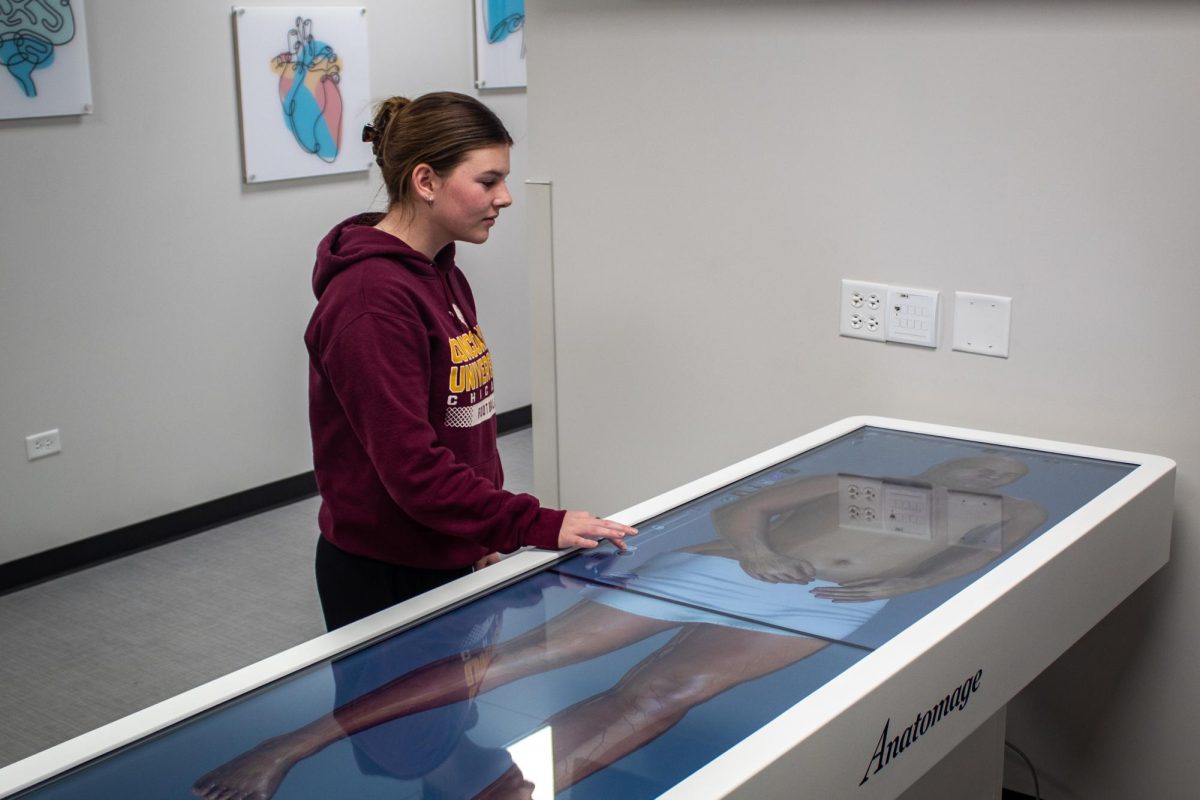
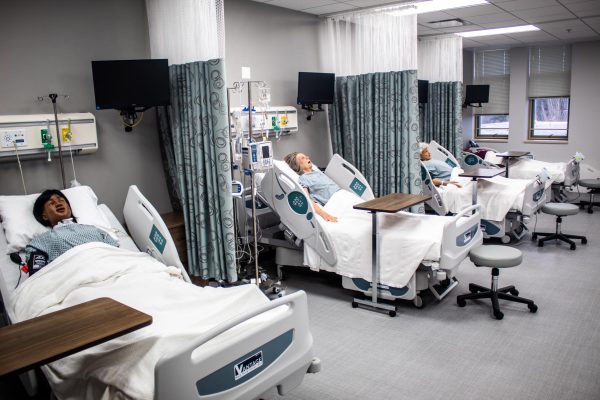
On CUC’s campus, students will use tools that help prepare them for real-world situations in hospitals. From realistic life-sized dummies that can breathe, bleed, and give birth, to crash carts to carry “patients” around the lab, to VR goggles and an interactive touchscreen table featuring life-sized 3D cadavers and anatomical visualizations, Bayer wanted every tool to aid in the students’ learning.
These tools are housed in the simulation lab on the third floor of the Christopher Center on campus. The lab celebrated its third anniversary on Feb. 14 after being transformed from an office space. Close to $1.5 million from donors, fundraising, and specific nursing grants was spent on building this lab and outfitting the space with the necessary equipment.
The first five students who utilized these brand-new facilities, tools, and curriculum graduated in December of 2025. Among them was Anderson, who looked back at his time as a nursing student at CUC as a time of much learning and growth.
“They were really receptive to our feedback,” Anderson said. “They were working with us, not just telling us stuff. It really felt like a two-way street – we heard them, they heard us. And you know we’re gonna get through it together.”
Talk is underway for additions of a graduate program or even separating from the College of Health, Science, and Technology to become specifically the College of Health Science. “The opportunities are kind of limitless,” Bayer said.