







Blog

  • Idea Box Showcase Turns Skill into Service

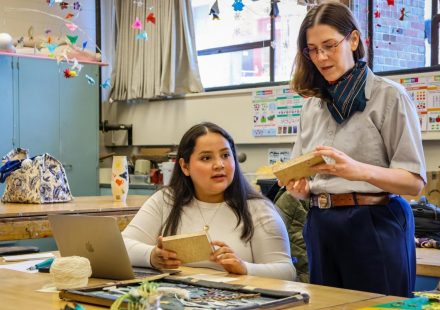
    Felted finger puppets of famous Shakespearean characters, a mixed media piece made entirely of old books, and a scene incorporating sculpture, fiber art, and recycled instruments, are among the pieces from CUC art students that will be featured in the Oak Park Library’s Idea Box space April 27 to 30.

    The installation is a collaboration between the Oak Park Library and CUC’s art department. Each piece highlights a local nonprofit, incorporating a service element to the exhibition. 

    “I was thinking about how do we make it more meaningful and looking at what the library does and what the mission of our university is, we came up with the idea that, why don’t we highlight local nonprofits?” assistant professor of art Angela Dieffenbach said.

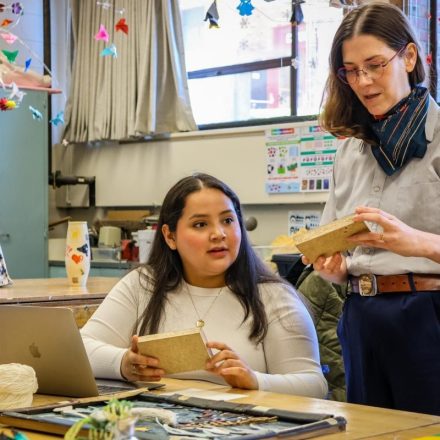
    Dieffenbach’s 12 Advanced Studio students embarked on their projects after spring break, choosing nonprofits that piqued their interest.

    “I chose the Oak Park Festival Theater because I’ve had a big personal connection to the theater,” said senior Nathan Goman, who was involved in theater both at Concordia and in high school. “I want to help spread the importance of the theater and what it means to me.”

    Felted finger puppets of characters from Hamlet made by Nathan Goman.

    Goman crafted 11 felted puppets of characters from various Shakespeare plays for the showcase. Each individual puppet took five to six hours to perfect.

    Junior Sarah Redhage chose to work with Providing Instruments for the Next Generation (PING), which provides free instruments, music scholarships, and summer camps to youth in Oak Park and River Forest, making music accessible to everyone.

    “My mom’s a violin teacher, and I’ve grown up in music my entire life,” Redhage said. “So it’s been a really big part of my life and a lot of my favorite memories came from summer music camps. I was really touched and I was like, ‘Oh my goodness, this is so cool and I need to pick this one.’”

    Choosing to pursue a mixed media project, Redhage’s piece incorporates sculptures of children below a draped banner embroidered with sheet music for beginner tunes. Ceramic and fiber arts have become go-to mediums for her recently, she said.

    “I didn’t want just a flat painting,” Redhage said. “I was just kind of thinking, what would be a good way of showing how multidimensional the effects of music are? It touches a lot more parts of your life than you would think. And it’s not just these people give you instruments for cheap. These people are literally changing lives.” 

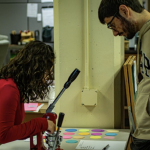
    Junior Sarah Redhage working on her piece for the Idea Box showcase. (Nate Clayton)

    Beyond being able to pour their talents into a cause they are truly passionate about, some students have gotten some significant professional experience presenting their art. Senior Isabelle Campos, who chose Friends of the Oak Park Public Library as her charity, presented her project at their bi-monthly meeting. 

    “I got to meet all the people that were on the website that I’ve been researching, and so it was really nice,” Campos said. “I was actually really surprised just how well they received it and how gracious they were, I just felt very welcomed. And I didn’t really have any nerves about it. I just felt a lot of joy being able to share it.”

    A longtime employee at her local library and frequenter of Friends of the Library book sales, Campos focused on capturing what makes libraries so special to her.

    “I knew I wanted to do something that represents the mission, which is basically providing access to and giving new life to old books and giving access to the community through their book sales,” Campos said.

    For her project, Campos constructed a scene entirely out of used books and recycled materials. The used books and old catalog cards were sourced from CUC’s library. 

    “I had a lot of fun making it. I like how it challenged me to be creative in ways that I didn’t know,” Campos said.

    Once the showcase concludes, the finished pieces will be donated or sold to raise money for the charities the students worked with. 

    “It’s been so rewarding to see students see how art can touch people and really highlight the beautiful, lovely things that’s happening in this world,” Dieffenbach said. “I’m really touched by it and it’s been inspiring to me to think about like ‘oh how can I help support the good work that’s being done?’”

    For many students, the community aspect of the project has been rewarding.

    “I’m really glad that we’re kind of getting out more in the community,” Redhage said. “Because, obviously, our campus gallery is cool, but we’re part of the Oak Park and River Forest community. And I think we should really act like it. And even if we’re not staying here for the rest of our lives, it’s good to know what’s going on. And it’s good to support things while we can, while we’re here.”

  • New Four-Year Nursing Program Proves Unique

    A year and a half into Nicolaus Anderson’s nursing studies at CUC, something wasn’t clicking for him.

    At the time, CUC nursing students would go through what was called the “Two Plus Two” program where two years of classes were taught in science, math, and other general education classes by CUC faculty and two additional years were done through a neighboring university or college, like the now-closed Oak Point University. Over 1,000 nursing graduates from CUC went through the Two Plus Two program over 40 years.

    “I wasn’t getting what I wanted,” Anderson said. “Academically, socially, it wasn’t Concordia – and there was a lot of issues with that.” While he initially chose CUC for the tight-knit community and Christ-centered atmosphere, with almost all of his classes taken at a completely different school, Anderson was unhappy in the situation.

    That all changed when he ran into the newly hired CUC director of nursing Kristen Bayer in late 2022. They discussed Anderson’s struggles with the current nursing program while Bayer introduced him to the new four-year program she was working to bring to CUC.

    “I met her and started working with her,” Anderson said. “Even while I was taking classes at this other school, she was helping me study, you know, tutoring me and all that. She reminded me of what I wanted from school and why I chose Concordia in the first place.”

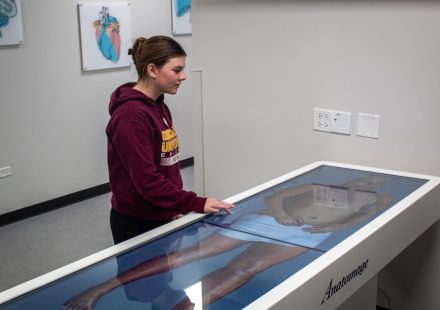
    Nursing simulation lab (Nate Clayton)

    Bayer’s vision for this new four-year program was unlike what CUC had seen before in the nursing program. Her goal was to focus on that same reason Anderson chose CUC to begin with – consistency, community, and faith.

    She wanted the experience of a nursing student to feel uniquely Concordia by looking at nursing through the lens of a vocation used to serve one’s neighbor.

    “Bringing our faith into the classroom is really important,” Bayer said. “And really leaning into faculty who are strong in their faith, who have been nurses for a long time, who have a willingness and a desire to really explore that part of what makes the job so much a vocation with our students.”

    Anderson said the nursing faculty were important in his experience with the new program.

    “They were really there to help us through it the whole way, and gave us what we needed to be successful,” Anderson said. “They really wanted the best out of each and every one of us, so I felt like they were personally invested in us. We weren’t just a success rate to pass our tests and move on.”

    From checking in on students regularly to standing beside them on their first clinical while they perform CPR on real patients, each member of the nursing faculty was chosen specifically because of their love of the vocation and care for students.

    “The faculty are not just a teacher in a classroom,” Anderson said. “I’d always stop by their offices [and talk] about class, about life, about this, about that. You know, they’re always there for us – for pretty much anything.”

    In addition to the faculty being chosen very specifically, the students’ schedules, the tools they use, and the spaces where they work are central to Bayer’s vision for the nursing program.

    In contrast to most nursing programs starting clinical rotations at nearby hospitals the third or fourth year of school, Bayer wanted students’ schedules to mirror their interests soon after coming in. She schedules clinicals to start the student’s second year, whether in the ICU, ER, or anywhere in a hospital that student is interested in getting a deeper view.

    “If a student does two years and says ‘I want to be a nurse,’ and then you go to your first clinical in your junior year, after you’ve done all the prerequisites you need, it’s hard to then pivot,” Bayer said. “If you say ‘I don’t want to sit with blood, I don’t want to touch a person that’s sick, I don’t want to be at the hospital,’ they just don’t realize that. We recognize that in students.”

    Study room used by nursing students with professors’ offices just down the hall. (Nate Clayton)

    Students get additional hands-on and real-world experience with a senior capstone. Anderson worked night shifts shadowing a nurse and learning all he could from working with real people in the hospital. He is now a registered nurse at Methodist Hospital in the emergency room.

    “Most of your clinicals, it’s your instructor and then five to eight students, and you’re kind of all there on the floor practicing, trying to see stuff,” Anderson said. “But the capstone, the way it works is you, as an individual student, go to this unit and get assigned a staff member from that hospital and you work with their schedule.”

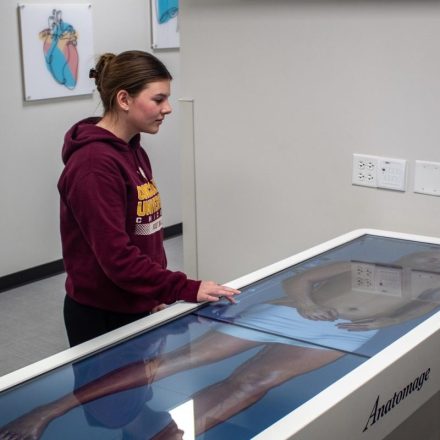
    On CUC’s campus, students will use tools that help prepare them for real-world situations in hospitals. From realistic life-sized dummies that can breathe, bleed, and give birth, to crash carts to carry “patients” around the lab, to VR goggles and an interactive touchscreen table featuring life-sized 3D cadavers and anatomical visualizations, Bayer wanted every tool to aid in the students’ learning.

    These tools are housed in the simulation lab on the third floor of the Christopher Center on campus. The lab celebrated its third anniversary on Feb. 14 after being transformed from an office space. Close to $1.5 million from donors, fundraising, and specific nursing grants was spent on building this lab and outfitting the space with the necessary equipment.

    The first five students who utilized these brand-new facilities, tools, and curriculum graduated in December of 2025. Among them was Anderson, who looked back at his time as a nursing student at CUC as a time of much learning and growth.

    “They were really receptive to our feedback,” Anderson said. “They were working with us, not just telling us stuff. It really felt like a two-way street – we heard them, they heard us. And you know we’re gonna get through it together.”

    Talk is underway for additions of a graduate program or even separating from the College of Health, Science, and Technology to become specifically the College of Health Science. “The opportunities are kind of limitless,” Bayer said.

  • Former Cheer and Stunt Athletes Say They Were Pressured to Compete Through Injury

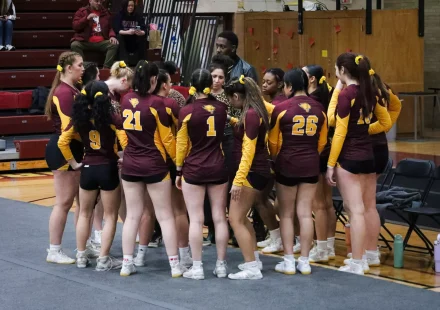
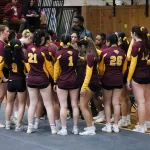
    Amid allegations of athletes being pressured to compete through injuries and coaches not being present at practice, the Concordia University Chicago Cheer and Stunt teams had their 2026 seasons cancelled as questions began to appear pertaining to the culture of both teams. 

    In recent years, the Concordia University Chicago cheer and stunt teams have been two of the most successful programs at CUC. In their 2025 season, the cheer team made their second consecutive appearance in the Advanced All-Girl Division Three National Finals, finishing fifth in the country. The Stunt team also reached the National Championships in their sport before falling to Misericordia University, who was ranked second in the nation. 

    On Feb. 11, CUC director of athletics John Jaramillo put out a statement announcing the cancellation of the season. That same day, it was announced that Eleese “Cheetah” Farrar would no longer be serving as the head coach of either program. 

    Jaramillo said issues within the program were first brought to his attention late during the fall semester. That was when he began having conversations with Farrar. When the decision was made in early February that both seasons would be cancelled, Jaramillo spoke with the athletes before it was publicly announced.

    “I told them personally,” Jaramillo said. “I didn’t want them to guess. I asked them questions about their experiences, and asked them what I could do to address anything. Around the same time is when the athletes heard from me that Coach Farrar was no longer with CUC.”

    Jaramillo declined to comment on the factors that led to CUC parting ways with Farrar, and on when that particular decision was made, citing private personnel matters.

    Athletes from both the cheer and stunt teams said they had been pressured to compete through injuries.

    “During practice, I developed chest pains,” said Hyriany Borjas, a sophomore on the cheer team. “We were mandated to go to a tumbling gym, and when I went there I got yelled at. During conditioning, I tried to stop because of the pain, and I was yelled at for being a wimp.”

    Georgia Lopez, a sophomore on the stunt team, also said that she was told to keep practicing through an injury, which has resulted in her now needing surgery.

    “I had a recurring injury from freshman year, so I took the summer off,” Lopez said. “Coach Farrar did not take care of her athletes. If you got injured, you had to keep going. I injured my rotator cuff, and then my labrum.”

    Farrar did not respond to questions for this article.

    Another large issue surrounding the teams was the low number of athletes that each team had, and confusion over who was on each team.

    “In October, an injury was reported, and the athlete participating wasn’t on the roster,” said Alex Sikora, the assistant athletic trainer. “We are liable for athletes; we’re the first to respond to an injury. If we don’t know they exist, we can’t contact them. It started with one, and there were more after that.”

    Beyond documentation issues, the low number of eligible athletes on each team forced higher-level athletes to practice routines with athletes that weren’t up to the same skill level.

    “We had athletes that were at a level five skill level, and they had to practice with athletes that were only level one or two,” Sikora said.

    The number of eligible athletes on each team played a role in Jaramillo’s decision to cancel both of the seasons. 

    “As the fall semester was nearing its conclusion, we looked at the number of eligible students on each roster,” Jaramillo said. “We looked at where we are at with the rosters, and shortly after the spring semester began, we asked ourselves the question of whether we would have enough to field a team.” 

    Low recruiting numbers were unsurprising to the athletes on the team. 

    “Recruiting was terrible,” Lopez said. “I don’t think any of it was done by the coaches, it was all done by the captains on the team.”

    One aspect that didn’t help was the question of Farrar’s commitment to the team.

    “There was a lack of accountability with the coaching staff,” Lopez said. “Coaches didn’t show up as often as they should. It was a terrible environment.”

    Borjas agreed with Lopez, saying that it felt like the coaches had been more committed the prior season, and that coaches wouldn’t show up on time to practice, so the athletes would have to wait for them.

    It wasn’t just the athletes that noticed a lack of commitment from the coaches. Sikora said that she felt the athletes were being put on the back burner.

    “I feel bad for the athletes,” Sikora said. “You need a coach that is present. In December, I began expressing my concerns about what everything would look like when we returned from winter break. Then we came back from break and there were two straight weeks of miscommunication and coaches not being present.”

    Sikora said she tried to have conversations with Farrar on multiple occasions, but Farrar wouldn’t communicate with her. Sikora said there were times when she would try to communicate with Farrar about the team, and get no acknowledgement of her concerns.

    Both Lopez and Borjas said they were not surprised by the announcement that their respective seasons had been cancelled. 

    “Compared to where we were last year, we had nothing,” Lopez said. “There was no way we could have had a season.”

    Jaramillo has already begun the process of finding someone to replace Farrar, and knows what he is looking for in a coach.

    “We want someone that is consistent, and has strong, caring, and empathetic leadership,” Jaramillo said. “The Chicagoland area has a strong pool of talent for both athletes and coaches, and CUC has a lot to offer.”

    Jaramillo added that while there is no firm timetable for hiring a new coach, he would like to have someone hired by the end of the semester, so that they would be able to meet with current and incoming student athletes. 

    “It’s not easy to do a coaching search during the school year, but there really is no good time,” Jaramillo said.

    Sikora said that while she is sad for the athletes that won’t to compete this season, cancelling the seasons was the right call.

    “I feel bad the athletes won’t get a season, but it takes a weight off their shoulders,” Sikora said. “I’m relieved they won’t be put in positions where they aren’t prepared. College is tough, we don’t need to make it tougher for the athletes.”

    Sikora also has specific traits in mind for any prospective cheer coach.

    “We need someone that will take the time to know and understand their athletes,” Sikora said. “That’s what makes the difference between a team staying together, and a team falling apart.”

  • Book Haul Crew Rescues 2,000 Books from CUAA Library

    As professor of theology Charles Schulz stood in the middle of Concordia University Ann Arbor’s Zimmerman Library, which was deserted save for his five-person crew and the librarian, he felt all of the memories come flooding back. He recalled long nights completing schoolwork for his undergraduate degree and doctorate, and remembered holding classes in some of the rooms in the library, directing students to particular resources.

    Now the Zimmerman Library’s future is uncertain. With CUAA ceasing the majority of its programs in June 2025 and currently in talks to sell off most of its land, Schulz stepped into its library for perhaps the last time to rescue books for CUC’s collection.

    “It was bittersweet,” said Schulz, who had come to teach at CUC in 2024 after CUAA had first announced their restructuring. “That library had been my undergraduate library. I went to school there, and I taught there for about 23 years. And now to see the campus silent and empty is heartbreaking, because it was such a vibrant ministry in that place.”

    Early this semester, after many months of asking what would happen to the collection, Schulz was notified of the opportunity to recover books from the CUAA library. He then put out a general invitation to CUC faculty to select books from the library catalog that would be useful to them and their students.

    On Friday, Feb. 20, Schulz, along with four of his students and assistant professor of English Joshua Tuttle, embarked on a roadtrip to CUAA to bring books from their collection to CUC. The crew stayed in the home of Schulz’s former parishioners in Ann Arbor for the night and were at work in the CUAA library in the morning.

    By the end of the experience, after painstakingly typing out every ISBN and barcode to document what they took, they loaded a U-Haul with approximately 2,000 books, most of which were related to English or theology.

    Schulz wasn’t the only one on the road trip with a connection to CUAA. Junior Tim Burmann, one of the students helping out with the haul, was formerly a student there before transferring to CUC in 2024.

    “I think it was a good experience,” Burmann said. “It kind of felt like burying the body a little bit. Like, all right, it’s over. But now we can at least take the good things that we knew were over there and bring them over to our collection,” 

    Though the crew walked away with boxes upon boxes of books, they still had to be selective about what they chose to take.

    “It had to be something that I could see wanting to either use in a course or things that, in the way that I’m often directing students into the library to do some browsing and discovering on their own, things that they would, following a citation trail, be led to,” Tuttle said. “Basically, it had to be something that a student would be led to directly or indirectly from the coursework. Otherwise, I couldn’t justify it.”

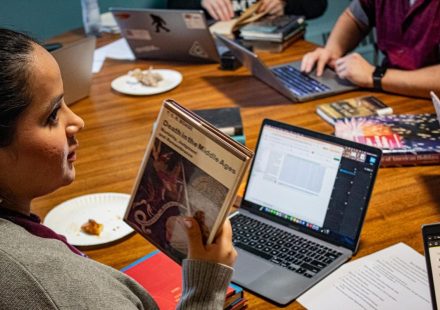
    The English literature is currently stored in the third floor of Brohm Hall, though where the books will ultimately land is still uncertain. Tuttle hosted a book sorting party on March 31 to discover which books from CUAA are already owned by the CUC library, in order to prevent duplicates in the collection. 

    “This really was probably a once-in-a-generation opportunity to grow our collection in one fell swoop at zero cost,” Tuttle said. 

    The theology books are now housed in the St. Isidore of Seville Theological Collection, found in the second floor of Kretzmann Hall. 

    “I know some of my colleagues have already found it useful, when I’m preparing for a class and I say, ‘I need a commentary on that Bible book’ and I don’t happen to have one on my shelf,” Schulz said. “It’s very convenient for me and my studies and supporting my work with the students. And I’ve already had the parents of prospective students comment on how impressive the books look and how it indicates that our school is a place for study and for real intellectual growth.” 

    The theological library is open to all students. Students can check out books by emailing Schulz with which materials they have taken out. 

    “It’s very helpful, especially for languages. We have a bunch of patristic church fathers in original languages, so a bunch of Greek and Latin and church fathers, so that’ll be a super good resource,” said junior Troy Zimmerman, one of the students who went on the book haul trip.

    The newly-acquired books have wider relevance beyond church work and theology students, extending to other fields relating to the humanities.

    “Those books that we got, there’s no way to really describe how useful those things are for the students that we have, especially in any sort of classics-type department like English, theology, philology, philosophy,” Burmann said. “We don’t have those books here. And so being able to have those and have them at free access, it’s just insanely useful for us.” 

    Despite the sadness surrounding the closure of CUAA, Schulz viewed the experience as an opportunity to expand CUC’s holdings of physical books, a fleeting resource in an increasingly digital world.

    “Students are drawn into deeper scholarship when they have a physical book in front of them. Even when it’s on the shelves, it invites them to open it in a way that a web page doesn’t,” Schulz said. “And not only does the book on the shelf invite you, but the book next to it, and the book that you just happen to be passing by, and so the serendipitous discoveries that happen with library collections are just untold. They’re just fantastic.”

    Correction: A previous version of this article incorrectly reported that the English books would be integrated into the collection at Klinck Memorial Library. They will not be absorbed into the library’s collection.

  • Pair of Star Freshman Lead the Way for Women’s Basketball

    In their 2024-2025 season, the CUC women’s basketball team won only five games, with just one victory in conference play. At the end of the season, the team’s nine leading scorers did not return, with five of them transferring to other programs, three graduating and the other joining the tennis program at CUC. Despite all of that, the Lady Cougars won 10 games this season and nine conference games. This resurgence of a season was led by two freshmen, Ai Yonemura and Naveya Jackson.

    Yonemura came to CUC all the way from Yachiyo, Japan play basketball and earn a college degree in America. In her freshman season, she averaged nearly 17 points per game, which was the most of any freshman in the NACC and second most by anyone in the NACC. This along with almost four assists per game earned Yonemura NACC Freshman of the year alongside first team all-conference honors. 

    “I was glad to get the conference,” Yonemura said. “I’m from Japan so I didn’t know about the United States conference system.” 

    Graduate assistant coach Mikalah Ellis said the coaches knew they had found something special in Yonemura when they were recruiting her.

    “Yonemura’s mixtape was one of the best mixtapes we’ve seen in a while, just because she could play both sides of the ball really well, along with her basketball vision,” Ellis said.

    While entering as a freshman and becoming one of the best players is hard enough, doing so while coming to a different country and learning a new language shows Yonemura’s impressive work ethic. Ellis said it didn’t matter if it was learning a new language, a new culture, a new coaching staff, or a new system; Yonemura attacked all the challenges she faced head-on. 

    In their preseason testing, the coaches set a goal of a 7:45 mile time for their girls. In her first attempt, Yonemura very easily made the target time. Yonemura then ran a 6:08 mile time on an attempt shortly after. Ellis said this showed the coaches that Yonemura could be a special talent for the Cougars.

    Outside of basketball, Yonemura is continuing to adjust to living in America. She said she is really working on her communication both on and off the court. She has also set a goal that seems universally relatable for college students.

    “I feel like everything is expensive for me,” Yonemura said. “I need to save my money.” 

    Yonemura wasn’t the only Lady Cougar who had a special freshman season. Jackson, a guard from Sun Prairie, Wisconsin, averaged 13 points per game, which was second among all freshmen in the NACC, just behind Yonemura. Jackson’s season consisted of multiple 20-plus point games, along with a game-winner against crosstown rival Dominican in their Feb. 18 matchup.

    Jackson faced her own set of challenges that she had to overcome in her freshman season. Despite being the second leading scorer on her team this past season and the second leading freshman in the conference in points per game, Jackson only started seven of the 23 games she played in this past season. Jackson credits how she dealt with the different roles to her mentality.

    “I always had the same mentality going into the game, off the bench or starting,” Jackson said. “Obviously, it’s a big privilege to start, but if you don’t, you still need to be ready to go into the game and make an impact.”

    When it came to making the impact she did her freshman year, Jackson wasn’t completely surprised. Although she didn’t know exactly what her role was going to be as a freshman, she always sets big goals for herself. She could come in and make an impact when her number was called.

    The team will look to build off not only Yonemura and Jackson’s success, but also the successful season as a whole. The team graduated zero seniors from their team from the past season and hopes to use their year of experience together to build from this past season towards a conference championship next season.

    “Now we have an older group going forward that has some experience,” Ellis said. “They love being around each other, they have that bond and chemistry, all we have to do is continue to put them in the right places.”

  • Housing Consolidation Leaves Some Students Feeling Burned

    Just a few weeks removed from winter break and into the start of the spring semester, students from the first floor of Jonathan Hall were surprised to learn that they would all have to find a new place to live. 

    “I found out from my roommate, who heard it from our RA,” said one First Jonathan student who wished to remain anonymous due to concerns of repercussions from the CUC administration. “We got an email a few days later, but it didn’t say a lot. It just said that we needed to find a new place to live in the next few days and be moved in a week after that.”

    Every spring, CUC undergoes housing consolidation. When students come back after winter break, the housing department takes stock of how many people who lived in housing during the first semester are not living in on-campus housing for the spring semester. This can be as a result of students graduating early, leaving to perform student teaching, or transferring to another school.

    Housing consolidation is usually based around new students being placed, people that used to have roommates receiving new ones, and students that were on the Concordia Hall wait list getting moved into CUC’s newest dorm building.

    First Jonathan normally operates as guest housing, not student housing. Guest speakers, visiting professors, and family members of CUC professors can stay in guest housing when visiting. However, the school was forced to make a change for the 2025 fall semester. 

    “For most of the summer, we were on track to meet our housing goals,” said Alexander Coile, the director of residence life at CUC. “Then in early August, we had a flood of male students apply for housing. That’s when we made the decision to convert the guest housing to student housing.”

    Come spring semester and the start of housing consolidation, the students in First Jonathan were left to their own devices to find where they would spend the remainder of the spring semester. 

    “We were able to decide where we would move to,” said the student from First Jonathan who was forced to move. “We could move into either Concordia Hall, Kohn-Lindy, or we could move to a different floor of DJ.”

    It was not clear to the students who had to move whether their housing rate would change. The cost of living for a double in First Jonathan is $3,275, while the cost of living in Concordia Hall is $4,275. 

    “The first email told us we would have to pay the upcharge if we moved into Concordia Hall,” said the student. “We received a second email later that told us the pricing would stay the same.”

    According to Coile, the decision to not have the students pay extra was a joint decision between the department of housing and the dean of students.

    “We decided it was extraordinary circumstances,” said Coile. “We were moving them when they would have otherwise stayed put.”

    Despite the school reversing course when it came to making the displaced students pay the upcharge, some students were upset by the fact that they were asked at all.

    “The thought that we might have to pay more for something that wasn’t our fault shouldn’t have crossed their minds,” said one student. “It shouldn’t have been discussed.”

    It wasn’t just the residents of First Jonathan who felt slighted. Some Concordia Hall residents were also upset to be receiving new roommates that they did not plan on having. 

    In particular, some Concordia Hall residents were upset by what they viewed as a lack of communication between themselves and the housing department.

    “Getting new roommates wasn’t an idea that had been thrown around at all,” said Jonathan Scheer, a junior and resident of Third Concordia. “Then my roommate told me that we were getting two new roommates.”

    To Scheer, the radio silence from Residence Life was what made everything difficult.

    “Everything we heard, we heard from our incoming roommates,” said Scheer. “We had minimal communication from Residence Life, and the only time I heard anything from them was when I went and talked to them myself.”

    Dennis Vanderplow, the Third Concordia resident assistant, said that he wasn’t informed that they would be receiving new residents on his floor. He said he found out when the new residents began to move their things into their new rooms.

    Coile said that a lot of the information that needed to be passed onto the RAs would have come from the residence director of Concordia, Adam Gray. Gray recently departed CUC to take a job in Texas and could not be reached for comment.

    Coile also said that while the goal is to notify everyone affected by housing consolidation, the school is not required to do so. 

    Students also found the timing of everything jarring, having to pack everything and move to another room a few weeks into the semester.

    “Everything felt quick, and not very planned,” said one student. “They could have asked us to move in early from break, instead of having us start the semester and then be forced to move while we’re trying to adjust to a new semester.”

    Coile said that the original goal was for everyone to be moved by Jan. 30, but the timeline ended up getting pushed back.

    While all the First Jonathan students were able to find a place to live, the experience left the affected students feeling a little bit disenchanted with the school. 

    “At the end of the day, it’s just frustrating,” said Scheer. “It almost felt like we were just names on a spreadsheet; they move our names around, and the job is done.”

  • High Parking Costs Prompt SGA Inquiry


    During much of his free time, junior Alan Saban finds himself picking up extra shifts in the tutoring center. Not to cover typical living expenses or to have extra spending money, but to help pay for parking.

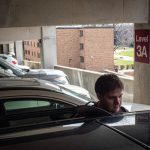
    Saban, a nursing major, needs a car on campus so he can drive to his required clinicals at local hospitals. As a campus resident, he pays $320 each semester for his parking permit.

    “If I did not have clinicals both semesters, I would not be paying for parking. The second I find out I don’t have clinicals next or the overmorrow semester, I’m not paying for parking at all,” Saban said. “It’s just the paralyzing fear of being unable to complete a clinical shift that keeps me in line.”

    Parking costs have been a hot-button issue this semester. The SGA is leading an effort to lower the cost of parking on campus, which is currently $88 per semester for commuters and $320 per semester for residents. The effort was spearheaded by junior Alexa Giannoulis, the president of the SGA, who was taken aback by the cost of parking.

    “Last year I was a resident, and I do have a car, but when they told us the price, my mom and I, we were really shocked,”  said Giannoulis. “Ever since then, I’m like, ‘This is just too expensive.’”

    A survey conducted by the SGA in February found that 54.3% of students believe the current permit pricing to be very expensive, and 71.9% of students say that the pricing is not fair. 

    “Our ultimate goal is so the prices, hopefully, they get lowered. But with the survey, just so we could talk to the higher-ups and be like, ‘Hey, this is student feedback, this is what we learned, here’s the stats for some of the questions we asked,’” Giannoulis said.

    SGA shared that student feedback during a meeting with administration on March 23, the first of a series of meetings aimed at discussing the parking issue. No official decision has been made about whether parking permit prices will be lowered or not.

    Part of SGA’s parking inquiry was researching the parking costs at other private universities in the area. They found that the parking costs at other nearby universities were less than those at CUC. Dominican University’s parking rates are $75 a year for commuters, and $100 each semester for residents. Elmhurst University’s is $75 a year for commuters and $125 a year for residents. At Aurora University, parking is completely free.

    “CUC’s parking fees reflect our cost structure and limited available parking off-campus,” said CFO John Thoelke over email. “CUC’s commuter pricing appears competitive based on a review of area colleges. On-campus resident pricing is higher than other colleges reviewed but reasonably priced for the River Forest community.”

    Thoelke added parking fees “offset the cost of the ongoing maintenance and depreciation of student parking areas on campus,” and that the challenge, if the parking fees were to be lowered, would be finding a replacement for that lost revenue. Thoelke said CUC incurs annual expenses of at least $200,000, and this year CUC collected $190,000 of parking permit revenue to cover those expenses.  

    Affordability for students, administrators said, is one of the factors being considered as parking permit pricing is evaluated.

    “We are very sensitive to the cost of parking permits for our students; therefore, we attempt to keep the parking permit price as low as possible,” said Kathy Gebhardt, dean of students.

    While many students are dissatisfied with parking costs, those who need cars to travel between school and home or to internships and jobs don’t have much of a choice in whether they pay for parking or not. And some students get creative to avoid the expense of a parking permit.

    “I know a lot of people, they’ll just park on the side, or they’ll try and get around it, or they’ll take public transportation so they don’t have to worry about that cost,” sophomore Michelle Marecki said.

    The high cost of parking has also presented some students with the dilemma of whether to pay for a full year of parking up-front, or pay by semester.

    “I have always needed my car. So I haven’t been able to just be like, ‘No, I can’t do it,’” said senior Evalynn Berg. “But I’ve been going back and forth between those two options because sometimes it’s way too expensive right out of the get-go. And then I forget to buy it for the next semester and I get a ticket.” 

    Saban said the parking prices seem unreasonable for the quality of the parking lot.

    “I think that the parking is a major thing that will continue to lower the students’ appreciation and pride of CUC, an emblem of the continual money-grubbing that makes students feel like they’re not really there to get an education, just there as commodities to be squeezed,” Saban said.


  • New Men’s Soccer Coach Looks to Jump-Start CUC’s Program

    Concordia’s men’s soccer program is turning to new leadership following their 1-15-2 season in 2025.

    Graham Brennan was recently hired as the new head coach of the program following the departure of Brad Callahan, who held the position for the last three seasons.

    Brennan brings a wealth of experience, largely in the Chicagoland area. Brennan was the head coach of the Roosevelt University men’s soccer program from 2012 to 2019, with a record of 84-60-11 and six winning seasons during that span. Most recently, Brennan was the assistant men’s soccer head coach for the past six seasons for Loyola University Chicago.

    “I’m using the same kind of model I had back at Roosevelt, hitting the Chicagoland area between contacts in high school clubs to attract talent that way,” Brennan said. “In my time with Loyola, I’ve kind of improved my network outside of Chicago and internationally to try and attract players that way, too.” 

    Graham Brennan

    Taking advantage of the hotbed of talent in the Chicagoland area is important as the program looks to turn into a winning one. Major League Soccer, the top level American soccer league, had 18 players from Illinois on team rosters as of 2024, which tied with Florida as the fourth biggest source of players in the U.S. Finding a coach with experience in the area who could keep athletes home was important for athletic director John Jaramillo.

    CUC’s men’s soccer program has only had one winning season since their founding in 2001. Rebuilding this program will take time, and both Jaramillo and Brennan acknowledge that. “Wins, loses, and ties are how the public sees success. But we want people brought in and rowing in the same direction,” Jaramillo said.

    Brennan said he is focused on building the culture of the program rather than simply on the wins and losses.

    “I’m not concerned about the wins and losses,” Brennan said. “It’s kind of like the foundation of getting players in, getting the culture going, setting expectations, and getting the players love for the game back.” 

    The current players on the team have experienced many losses during their time at CUC, so getting them to enjoy the game they fell in love with as a kid again is Brennan’s first priority. After that, Brennan wants to establish a culture and expectations before truly focusing on developing the team’s strategy.

    While turning around a struggling program like the one at Concordia seems like nearly an impossible task, Edgewood University, another team in the NACC, has already proven that hiring the correct coach makes this task possible. Edgewood had only won one combined game in the three seasons prior to the hiring of their current head coach Tim Bonner. Since then, Edgewood has gone 41-14-7 in his three seasons, including two regular season NACC titles.

    Very similar to Brennan, Bonner put a big emphasis on getting the players to love the game again when he came in. 

    “As a program with one win in the previous three seasons, we knew we needed to start by making it fun and really tried to make the experience not feel like work,” Bonner said. “Change the relationship with the sport back for our athletes to where it once was.” 

    Similar to Brennan, Bonner was focused first on building the culture at Edgewood before he really worried about the wins and losses. 

    “We were in a similar place to the current CUC program at the time when our staff came in March of 2023. We had a few difficult years prior to arriving, and the culture was fractured. In my early one-on-one meetings with players, I realized they had friends on the team, but they weren’t close as a group,” Bonner said. “We emphasized the importance of liking each other, rooting for each other and wanting to win for each other and as we continued to move towards a room full of people with that mentality, the results followed.” 

    Changing the culture and restoring his players’ love for the game again played a big role in how quickly Edgewood was able to turn around from a one win program from 2020 to 2022, to the top team in the NACC this past year.

    Alumni, fans, and family have not had much to root for with the Concordia men’s soccer team since its inception. However, with Brennan coming in with a similar mindset to that of Bonner when he turned Edgewood into national contenders, fans should have hope. If Brennan is able to establish his culture and bring in the right people, Concordia could be a team who is having an ESPN-type of turnaround very quickly.

  • A Year Without the Concordia Invitational Tournament


    January came and passed without an annual staple for Concordia students and athletes: this marked the first year since 1951 without the Concordia Invitational Tournament.

    CIT was a yearly tournament between Concordia University Chicago, Concordia Wisconsin, Concordia Nebraska, and Concordia Ann Arbor, in which athletes from these schools would compete against each other in basketball, dance, and cheer. This yearly tradition was put on pause for a year, and if it returns, will look different in the future. 

    The pause on CIT follows Concordia Ann Arbor shutting down their athletic departments due to financial struggles, and Concordia Wisconsin announcing last year that they would not participate in CIT in the future.

    “I am sad we didn’t get to do it in my last year of competing, but I am grateful for getting the years I did get, and that I got to close with a win,” said senior Gizelle Boyzo. Boyzo was part of the dance team that won CIT last year, which was the first time the dance team had won CIT.

    Athletes lost not only an opportunity to compete, but also the experiences and camaraderie that they would gain from this tournament. 

    “It was really a bonding experience, especially with our win. It helped us build our connection with each other,” said Addison Stewart, a sophomore member of the CUC dance team.

    CIT’s location rotated between the four Concordia schools, with many students travelling to the hosting school for the experience. Had CIT happened this year, it would have been hosted at CUC.

    CUC had not hosted the tournament since 2020, shortly before the COVID-19 pandemic. The second senior class in a row will be graduating this May without having seen CUC host the event.

    Concordia Chicago athletic director John Jaramillo is adamant in his plan to have CIT return in some fashion in the future.

    “I have heard many great stories, and I am committed to bringing CIT back in some fashion,” Jaramillo said. “It may look different, but we will bring back some aspects.” 

    CUC students got a glimpse of what could be with the pack the stands event the athletic department held on Jan. 17.

    The event included a double header of women’s and men’s basketball games on a Saturday where money was raised to help support a nearby school. While the games were normal conference basketball games, there were over 500 people at the men’s game and nearly 400 at the women’s game. Even with there being nothing necessarily special with the games, it shows there is interest in having a big event on campus to help bring students together and support the athletes.

    According to Jaramillo, Concordia Nebraska, one of the founding members of CIT, has expressed a willingness to be a part of whatever is next.

    Jaramillo hopes to have something in place as soon as next year, once the logistical issues of scheduling and venue are settled.

    “We want something that brings people together, something that creates energy,” Jaramillo said. “CIT has a history of energy and brought people together. While it may look different, that will remain.” 

  • Entrepreneurship Triad Program Connects Students With the Community


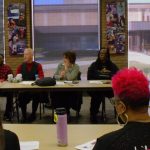
    Handshakes, introductions, and spirited discussion were common sights in the Oak Park room on Feb. 13 as students, faculty, staff, and local business owners had lunch and made new connections.

    The luncheon was a bridge between a morning and afternoon session of discussion and listening, students and their faculty coaches supporting their assigned entrepreneur by hearing their concerns and asking questions.

    The event was part of the Entrepreneurship Triad program at CUC, which began in January. Funded by a grant from the Bradley Foundation, it is a collaboration between the College of Business, the Free Enterprise Center and the Proviso Township Ministerial Alliance Network, a local organization dedicated to community transformation. 

    The program is an opportunity for students to get hands-on experience in business and for entrepreneurs from the Maywood area to get feedback on how to improve their businesses. Students receive their choice of a stipend or course credit for their efforts.

    “What we’re actually able to do is sit down with the client, speak to them, and find out what concerns they have that we could potentially assist them with in their development of trying to be sustainable,” said adjunct business professor J.T. White, who is a faculty coach in the program. 

    Each of the 12 triads consists of one CUC faculty or staff coach, one student and one entrepreneur. The individual triads meet once or twice a month for business coaching sessions in addition to monthly larger group meetings in the form of peer advisory sessions. 

    “With the peer advising, everyone listens to the problem, asks a lot of questions first, not suggestions. And then once they’ve exhausted the topic, then people make suggestions,” said Rachel Ferguson, director of the Free Enterprise Center at CUC. “It’s very exciting because oftentimes the feedback from the other CEOs will open up whole new vistas of how the problem could be handled.”

    The Entrepreneurship Triad is part of a larger, continuous effort by CUC to be involved in neighborhood stabilization efforts, Ferguson said. CUC’s ongoing partnership with the Rev. Reginald Saffo, chairman of the Proviso Township Ministry Alliance Network and a community leader in the Maywood area, helped inform the creation of the program. In May, CUC will host a fundraiser for Saffo’s program, Four by Four, which teaches entrepreneurial skills to middle and high schoolers.

    “The mistake a lot of universities make is they’ve got big ideas, but it’s what they think the neighborhood needs. And so they just show up and start doing things and they don’t know anybody and they haven’t asked anybody,” Ferguson said. “A lot of times it fails and they disappear. And so it ends up being even more discouraging to the neighborhood, as opposed to building something where you’re saying, ‘we’re going to be here.’ Building that sense of trust with our neighbors is really important to me.”

    As students, coaches, and entrepreneurs talk through the issues their businesses face, an emphasis is placed on listening, showing the entrepreneurs that they have support.

    “It’s nice to have someone else, not to do the work for me, but to help me push a little further on the parts of the business that are really not that easy to do alone,” said Lorenzo King, the owner of delivery service Easy Does It.

    That meant figuring out how to put some systems in place for the back end of the business and to build more structure to keep the business successful, King said. Among the concerns of other entrepreneurs in the program were improving the effectiveness of their advertising, setting up processes and documentation for on-boarding, and appealing to a target audience in marketing campaigns.

    “A student is able to showcase themselves to a business,” White said. “Also the school with the program is saying to the neighborhood, to Maywood, ‘Hey, we’re here for you. We care about you. You’re part of our community. We want to assist you in any way we can to see what we can do to help you grow, develop, or start off.’”

    Senior Emma Pflughoeft is working alongside Tandra Rutledge, founder of Avidity LLC, a faith-based mental health consulting and training agency.

    “I have been learning a lot from Tandra about her own personal experience with creating her own business and the amount of promotions that you have to do for that,” Pflughoeft said. “Being super consistent on online marketing and physical marketing and just getting out there is crucial for the growth and development of the business.”

    White said that a few of the students in the program are currently in one of his classes, and that he has enjoyed watching them apply what they are learning.

    “Another student that’s in the classroom is not in my triad, but I congratulated him and told him I was proud of him, because in the meeting he was actually echoing some of the points that we teach in the HR class about when there’s disciplinary action necessary, the four steps,” White said. “So I see the students, I learn it sticks, it works, they’re actually listening. They’re actually seeing potential in their vocation.”