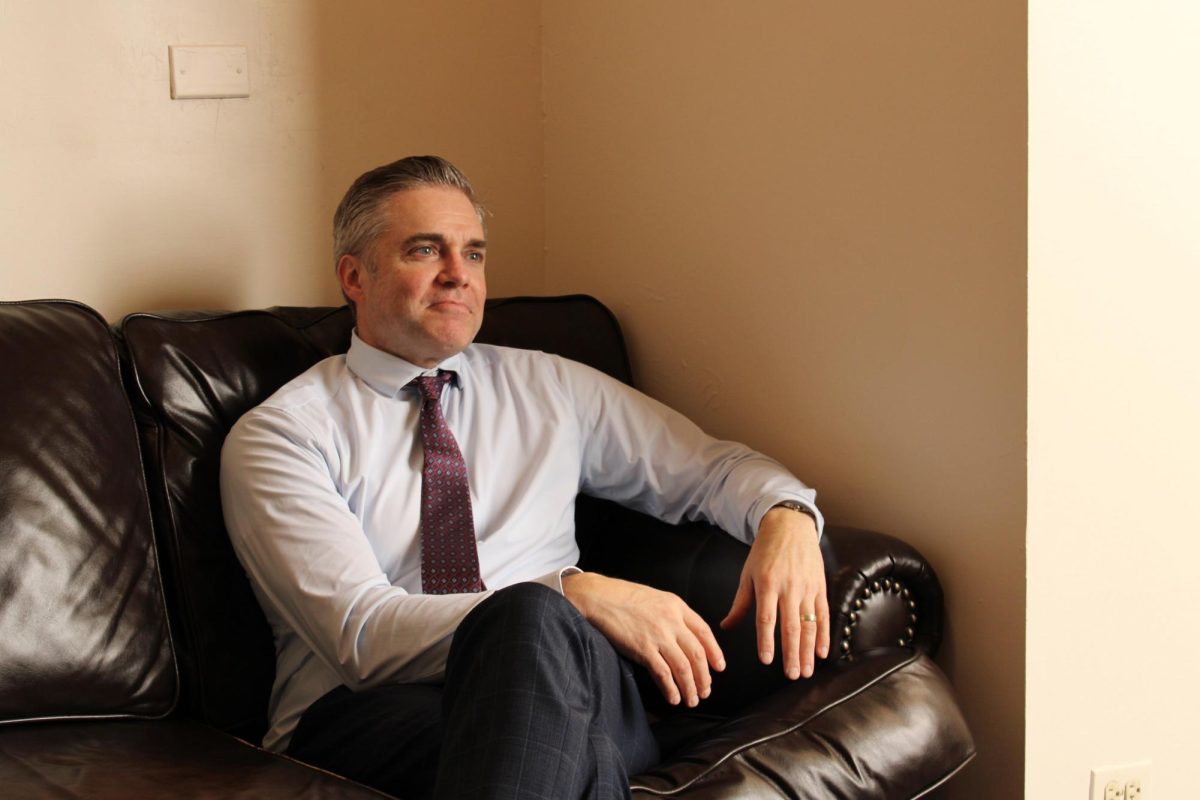



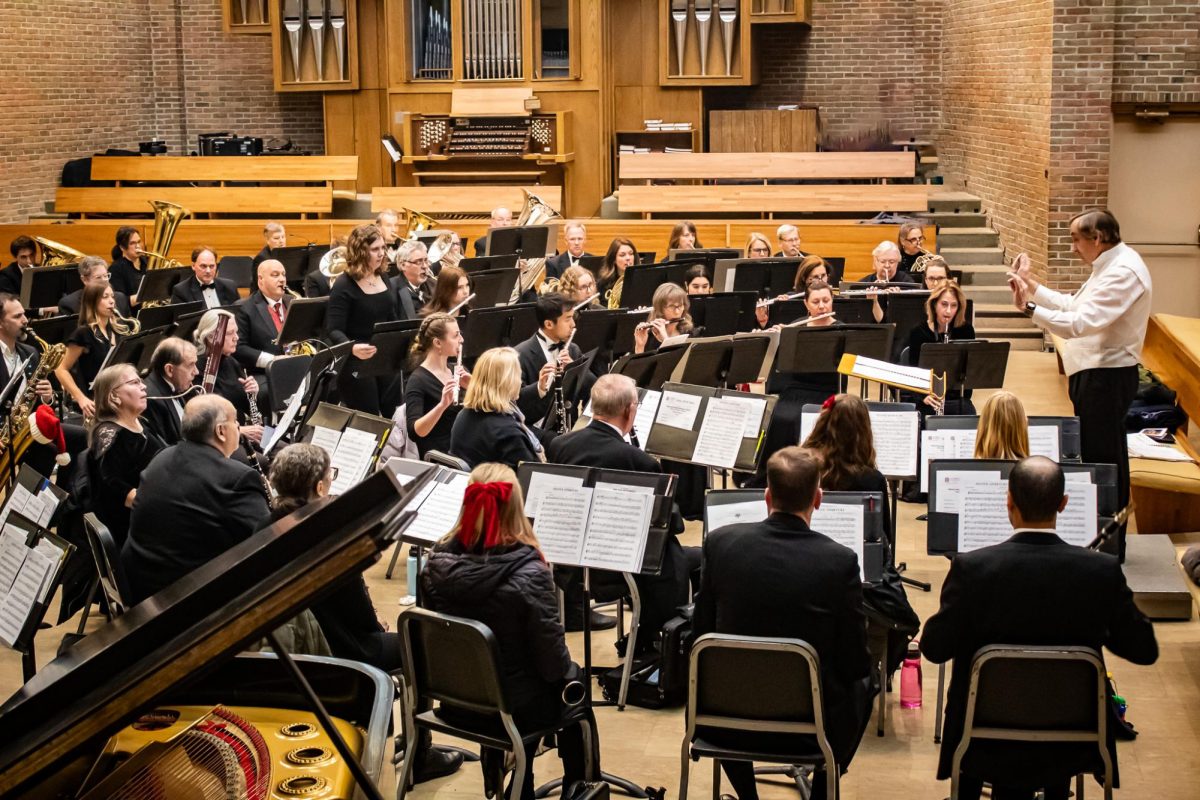



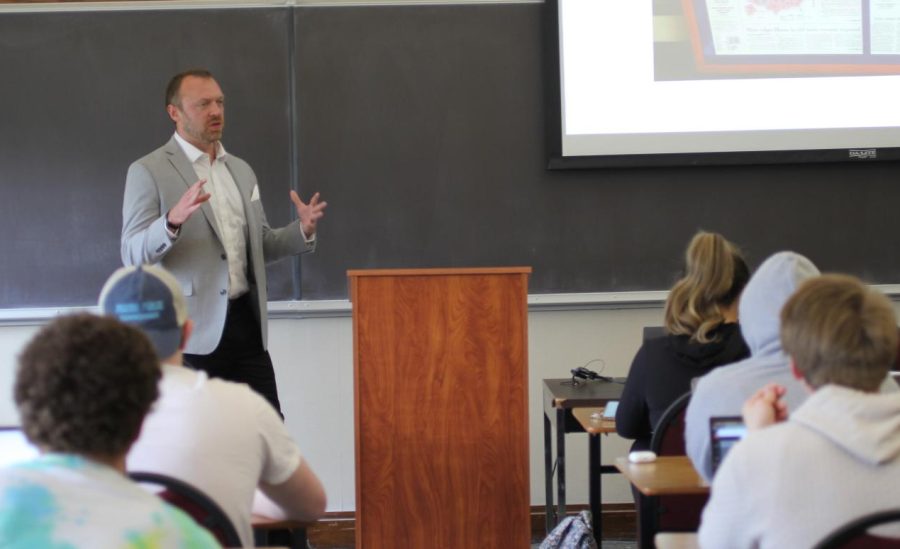






When Robert Balza first interviewed for the vice president of academic affairs position in December, he attended CUC’s annual Lessons and Carols. As the notes of Christmas carols washed over him in the Chapel of Our Lord, CUC’s rich music tradition became abundantly evident. It was clear to him then, Balza said, that this was one of the things that made CUC special.
Originally drawn to CUC because of its Christ-centered mission, Balza was previously the associate vice president of academic affairs at Concordia Wisconsin and saw an opportunity to serve in Chicago.
“I think the Chicago market desperately needs Christian higher education. This university fills that niche in a way that’s very special,” Balza said. “That’s really important, and I want to preserve that and grow that. The opportunity to be part of that was really important for me.”
Balza began his role as vice president of academic affairs on Jan. 12. His arrival follows the departure in August 2025 of CUC’s previous chief academic officer Eli Hestermann, who is now the chief academic officer at Carroll University in Waukesha, Wisconsin.
As vice president of academic affairs, Balza is responsible for supporting faculty development and recruitment, accreditation, developing programs and curriculum, and working with learning management systems such as Blackboard. He works closely with the deans of the colleges of business; education; health, science, and technology; and theology, arts, and the humanities, the library, and other departments in the university.
Within his first month as chief academic officer, Balza has taken an input-based approach, looking for faculty and student feedback.
“I’m meeting personally with every single professor and hearing about what they love about their job, what challenges they face, and how the academic office can better serve them,” Balza said. “I’ve seen some academic leaders come in and want to shake things up and change things, but it’s really important to understand the traditions and strengths of the university you’re walking into before you start trying to drive change.”
In addition to hearing the perspectives of faculty, Balza says that he is also interested in collecting quantitative data. Over the years, he has published a academic articles on developmental biology in the Journal of Biological Chemistry and the Proceedings of the Natural Academy of Sciences. With a PhD in biochemistry and background in the sciences, he says that he is fond of a data-driven approach.
“It’s important to look around and make those qualitative judgments but also to start counting things and track student outcomes,” said Balza.
When it comes to developing programming, Balza says that he hopes to put an emphasis on high-impact practices, which are designed to stimulate student engagement by putting learning into action.
“Things like internships and preceptorships, research with faculty, community service learning, all of these kinds of things take the skills and put them into practice,” Balza said. “And I want to make sure that that’s happening across the entire university in every single department.”
Balza also anticipates having to provide leadership when it comes to controversial issues such as AI usage.
“We’re going to see AI creep into all different fields, and our students need to be ready for that reality, empowered to leverage those tools where it’s assistive, and also to know the limitations,” Balza said. “There are certain things AI can’t do and will never be able to do.”
Balza says he hopes to bring in creative usages of AI that fulfill learning objectives but also show its strengths and weaknesses, especially when it comes to ethical concerns such as biases and privacy.
“My first goal would be to bring in experts from around the country studying the latest techniques and articles so faculty can understand how they can effectively teach with AI. Not necessarily banning it,” said Balza.
While Balza was still the associate vice president of academic affairs at CUW, Concordia University Ann Arbor, an extension of CUW, saw the closure of the vast majority of its programs. He said that during that period his role was largely to support the faculty and students.
“A lot of programs there were cut for financial reasons, and that was a really challenging situation for the faculty, but also for students,” Balza said. “There were students who had lost their advisors and who were moving on to other things and I kind of helped in that transition period. But that was a very difficult thing.”
The major cuts at CUAA raised important questions about the capability of the Concordia University system to remain competitive in higher education.
“While it’s really important to remain focused and guided by our mission, we also have to recognize that we have to pay the bills,” Balza said. “Balancing those kinds of things is a difficult thing, but it’s a responsibility that I take very seriously, helping President Dawn ensure this university will be around for hundreds of years to come.”
Innovation will be key to CUC’s longevity, Balza said, in light of ongoing trends in academia and in the workplace. One such trend that other universities have adopted is the emergence of reduced credit majors, which allow for certain bachelor’s degrees under the usual 120 credits.
Though there are no immediate plans to pursue reduced credit majors at CUC, administrators are beginning to discuss the possibility. Concordia St. Paul has already adopted reduced credit programs in exercise science and sports management.
“I think the important thing is that we’re thinking about those things. We’re aware of what’s happening in the competitive market around us and adjusting,” Balza said.