













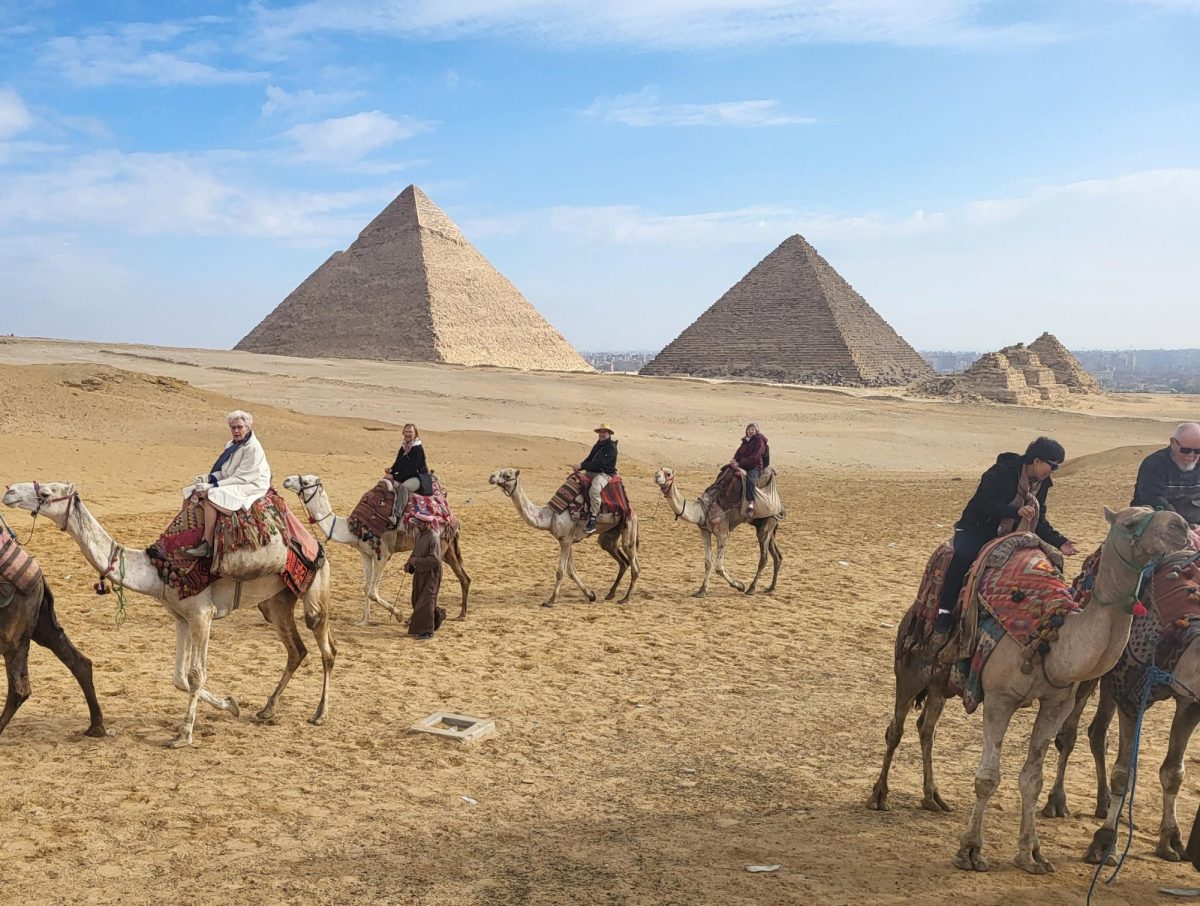
Over the past two summers, Concordia Chicago staff, students, and alumni have taken trips to Sicily and Greece. Next summer, another ancient area with deep ties to Christianity will be crossed off the list: Egypt.
The trip will be taken from June 6 to June 16 and will visit sights all over Egypt, such as The Great Pyramids, the Citadel of Salah El Din, and the Valley of the Kings, an area located in Upper Egypt (south of Cairo) that contains 62 known tombs of various pharaohs and kings from about 1500 BC to 1000 BC.
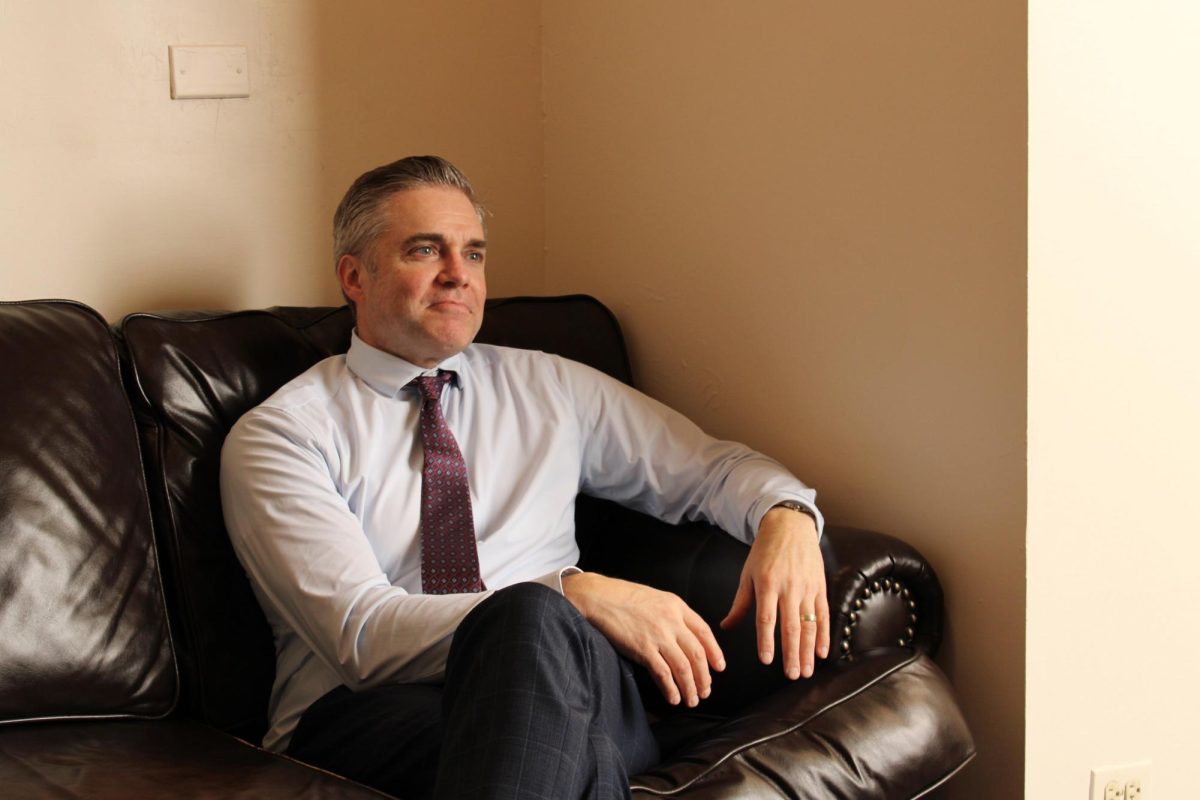
“I’m really looking forward to the Valley of the Kings,” said Concordia University Chicago President Russell Dawn, who will be one of the hosts of the trip. “I love history, and there is so much history represented in that one relatively small area.”
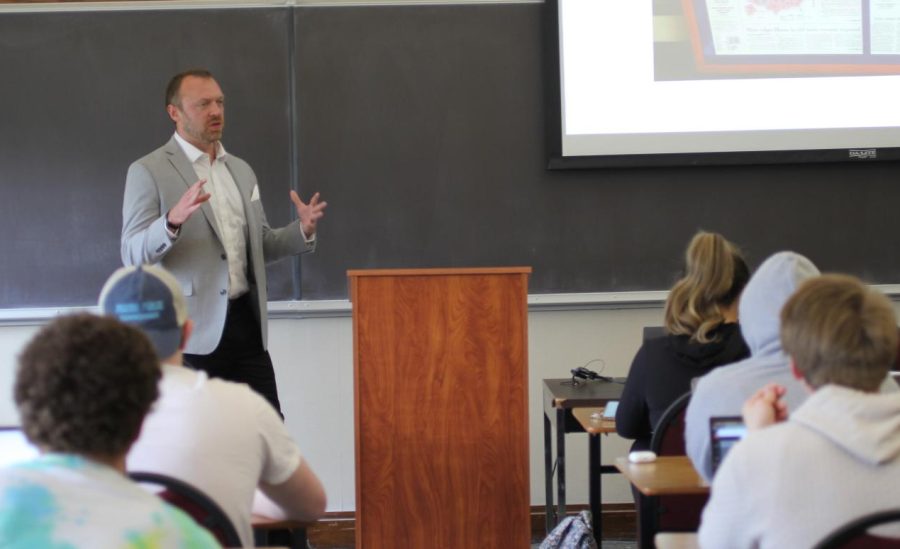
The other host for the trip will be assistant professor of History Joseph Holwell. Holwell said he was chosen for the trip because he has a specialization in ancient history.
“Egypt has a rich history with the rise of Christianity,” said Holwell.
Holwell also said that numerous sites such as Old Cairo, Wadi El Natrun, and the head of the Coptic Church can be found in Egypt. Old Cairo is a UNESCO World Heritage site, and was a center for early Christianity, while Wadi El Natrun is a desert valley located west of the Nile Delta, and was home to hundreds of Christian monasteries between 300 and 600 AD. The Coptic Church was an early Orthodox Christian church that was said to be founded by Saint Mark (who also wrote the Gospel that bears his name) around 42 AD.
Another person that knows much about the connection between Egypt and early Christianity is Reverend Kirk Clayton. Clayton was the one that suggested Egypt as the next location for the school to take a trip to.
“There’s a lot of theological implications with Egypt,” said Clayton. “Abraham went to Egypt. Joseph and the Israelites lived in Egypt until the exodus. After that, Egypt remained a world power and influenced the politics of Egypt.”
Those events took place between roughly 2800 BC and 1225 BC. Egypt is also prominent because about twelve hundred years later Jesus and his family fled to Egypt to avoid the wrath of King Herod. Alexandria was also the early center of Christianity, and its famous library provided a lot of scholarship.
Clayton said that over the course of the trip, the people on it will take a Nile River cruise, see how papyrus and hieroglyphics were made, and visit oriental rug manufacturers.
“It’s not just seeing the sights,” said Clayton. “It’s also about seeing the culture as well. You want to engage with the culture. You want to visit a tent bazaar with stone dozens and golden charcoal dips; try bowls of dips, hummus and meats.”
Egypt has a rich history that also extends beyond Christianity, and that played a role in Clayton suggesting Egypt as the next place the school should visit.
“The four primary cultures that lead into Western civilization are Italy, Greece, Israel, and Egypt,” said Clayton. “The school has already been to Italy and Greece, and the situation in Gaza took Israel off the list. That left Egypt as the only option left, which also happens to be the oldest of those civilizations.”
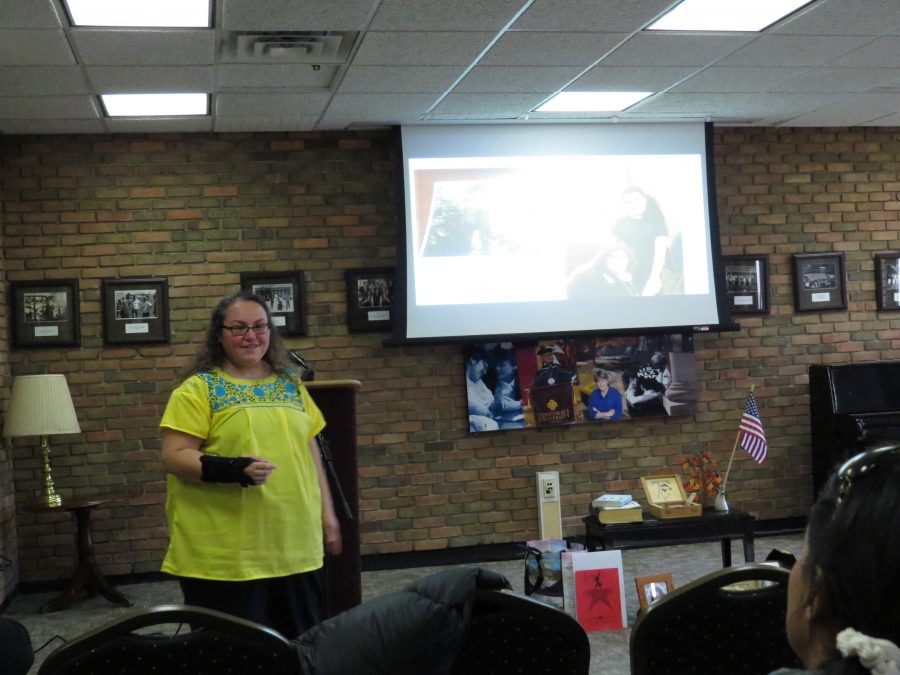
In order to take a trip like this, a lot of planning must occur. According to Kristin Wassilak, the Dean of the College of Theology, Arts, and Humanities, the school needs to get approvals and do proper risk management, among numerous other administrative things.
“Marketing played a role in choosing Egypt. It’s a very unique opportunity; it’s exotic. People will say ‘Wouldn’t it be cool to go to Egypt?’ We want to give very different experiences.”
The Egypt trip will be more expensive than past trips have been. Wassilak said the total cost for each person, not including airfare, would be around $5,150, which is roughly $600 more than the trips to Sicily and Greece.
Wassilak said that while the trip costs more this year, it is also a longer trip. The Nile cruise will take up five days of the trip. Other expenses are also included in the final cost, such as more meals being covered, and tips for tour guides, drivers, etc. being taken into account. Wassilak said this was done so everyone isn’t trying to pay in cash at the same time.
In spite of the increased cost, both Dawn and Wassilak said that the trip is shaping up quite well, with very high demand for spots on the trip. Wassilak said that this trip has garnered interest from a lot more graduate students than normal, and that it has been very attractive to alumni, friends of the university, and benefactors of the university.
Dawn said that the increased interest from a large variety of CUC-related people is a good thing, as it allows for a lot of opportunities.
“It’s different generations with different connections to the school being around each other,” said Dawn. “They’ll develop new bonds doing things together that aren’t at the school. That matters for building those relationships.”
Much decision-making also went into figuring out the best time for the trip to take place.
“We moved it back a little to include more of the teacher population,” said Wassilak. “We debated going over Spring Break, but that eliminates athletes and musicians on their music tours. We’ll use this trip to see if this timeframe works better for future trips.”
In terms of future trips, it hasn’t been decided where the next trip will take place, although Wassilak did say that they are looking all over, and that it will be a “big announcement” when they do decide where the school is going next.
Dawn has a few ideas for where he would like the school to go next, although he did say that the decision isn’t his to make.
“I’d love to go to Italy or southern France, and focus on the church fathers and the medieval church,” said Dawn. “Now that the situation might have cleared up there a little bit, I would love to include Israel. Israel helped to shape the classical world into something very different from the world before.”
To Dawn, these trips are important because they allow people to connect with the history of Christianity and the world.
“These trips help to ignite the imagination around history,” said Dawn. “These trips highlight the importance of those who came before us.”