

Written by Josh Heine
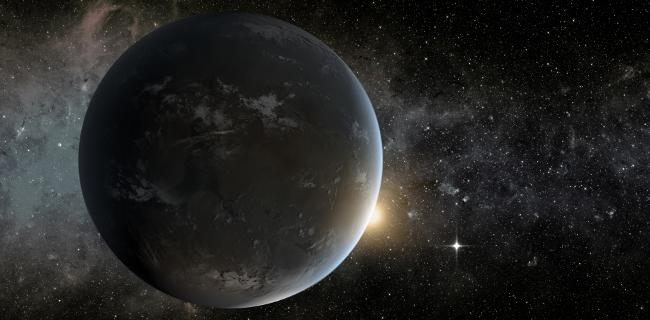
On February 27, the Kepler telescope revealed 715 new planets, some of which exist in the “habitable zone” that contains Earth. Many scientists are exuberant regarding these results, as these planets contain ideal conditions for supporting human habitation or housing alien life.
While they seem optimistic, these results may not be as exciting as they seem. It is true that the Kepler discovery provided more knowledge about the expanse and composition of the universe. However, all of these planets are inaccessible to our technology and any potential extraterrestrial life is most likely dangerous.
The idea of discovering new planets is fascinating to most humans. A result of our culture’s fascination with science fiction, planetary exploration has been a key component of NASA’s mission over the past decades. However, just because planets exist does not necessarily entail that humanity will eventually walk upon them.
A current example is Mars, which has been a major focus of NASA since the discovery of polar ice caps. Though Mars is our closest neighbor, the distance between Mars and Earth is 56 million kilometers at its minimum and 400 million miles at its maximum, depending on orbits. Due to this distance, a journey with current technology would require 150 days and any mission to Mars will not occur until the 2030s.
The planets discovered by the Kepler telescope are certainly millions of light-years away. Since one light-year is equivalent to 6 trillion miles, the time required to travel to one of these planets would be numbered in centuries. In addition, it is currently impossible to break the speed of light, which is how science fiction starships travel to distant worlds. The only foreseeable and plausible option for long-term space travel is a generation ship. This vessel would house the entirety of Earth’s population in addition to numerous plant and animal species in order to sustain life. Such a large ship designed to be an artificial Earth would allow humanity to reach an unexplored planet, though the original explorers would be long dead.
Another fascination for humans regarding interstellar travel is the possibility of extraterrestrial life. Almost all science fiction deals with some form of alien life and its interaction with humanity and the consequences. Most often, people view the consequences as beneficial: aliens form an alliance with humanity and share knowledge regarding technology and other benefits. However, I would contend that our first contact with aliens would be similar to “Alien” or “Independence Day.” Whether primitive insectoids devour humanity or gigantic telepathic squids invade Earth, the result is the same: extinction.
Stephen Hawking, the famed British theoretical physicist, holds a similarly pessimistic view regarding encounters with extraterrestrials. In 2010, he commented, “We only have to look at ourselves to see how intelligent life might develop into something we wouldn’t want to meet. I imagine they might exist in massive ships, having used up all the resources from their home planet. Such advanced aliens would perhaps become nomads, looking to conquer and colonise whatever planets they could reach.” Such cautionary advice should be heeded, as we are no doubt incapable of combatting an advanced race at this time.