

New students to campus may have a surprise guest in their rooms this winter as the mice population begins to make their way indoors to avoid the harsh Chicago weather. The Mus musculus, or the common house mouse as it is typically called, is just one of the species of mice that call Concordia home. Though decreasing in number, Concordia remains a host for several mice families looking for food, warmth and shelter.
For many, the idea of a mice infestation is enough to dispel an appetite, nevertheless, living in one. However, take a look on Google and you will see that mice are common, unwanted roommates in colleges all over the nation. Big or small, expensive or inexpensive, these tricky rodents find a way into even the most prestigious colleges. Concordia, located just under a mile away from Cook County’s Forest Preserve, is especially predisposed to these pesty critters.
“One of the things that makes it very difficult is that we are so close to the forest preserve which brings not only mice, but foxes, skunks, possums, raccoons and even deer,” said Andrew Pollom, Assistant Dean of Residential life and Student Conduct. “The presence of mice is an issue for the entire River Forest community. Our best bet [to eliminate the mice problem] is to pick up the entire campus and move us further away from the forest preserve.”
Though location seems to make the presence of mice inevitable, this is not the reason mice are getting inside. In actuality, it is a combination of factors including: the setting of the buildings and their age, the presence of an on-campus garbage compactor and open tunnels that connect every building via trash-rooms. Not only do the settling buildings provide cracks and holes big enough for the stealthy creatures to enter in, which according to the Illinois Department of Public Health is anything “slightly larger than 1/4 inch in diameter,” but the garbage compactor serves as a endless food supply and the tunnels provide a reliable route of transportation, making every dorm room accessible and possible to explore. Additionally, as if these unavoidable elements are not enough opportunity for the mice already, students, faculty and even physical plant projects continue to make the problem worse by propping open doors for long periods of time, drilling holes in the walls for piping, storing food in the open and not meeting common expectations of sanitation and cleanliness. Once in, however, it is not a matter of keeping them out. Rather, it is a matter of decreasing their numbers, killing off each mouse one by one.
[pullquote]Our best bet [to eliminate the mice problem] is to pick up the entire campus and move us further away from the forest preserve.[/pullquote]
“The first thing you do is cut off access making it harder for them to get in,” Pollom said. “Then you have to address the ones that you have in and try to get them out. We could certainly poison and gas and get them all at once. The downside of that is that we have students living in the halls who have personal property here. The other negative is that if we were to gas the buildings over the summer, the mice that die in the walls would rot and stink.”
Although poisoning the mice all at once seems to be out of question, many students are frustrated with the “one by one” method of decreasing the mice presence on campus as practiced by physical plant workers after receiving a complaint. Many are concerned that the current trapping procedure is ineffective.
“I was a little surprised when the physical plant worker discovered the hole where the mouse got in my room and then put the trap on the complete other side of the room where the mouse probably wouldn’t go,” Krauss resident Annalisa Scheele said. “Needless to say, we never caught it. I don’t know what happened to it or if its still in there.”
While some dorms have more mice issues reported than others, for example, Mary Martha has had six reports since August, Krauss has had two and Gross has had one, every dorm has had some form of trouble with mice in the past. Still many have given up trying to fight the problem, accepting the reality that they will just have to share their rooms with mice for the rest of the semester, no matter where they live.
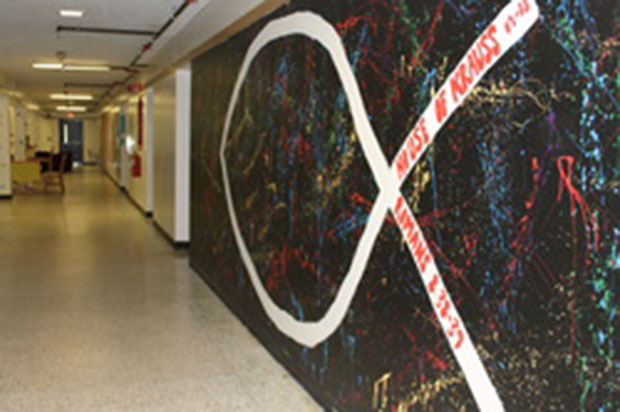
“I lived [in Krauss] two years ago and this year also. I’ve had a mouse in my room and the room next to mine both times,” said Andrea Carrabia, Resident Assistant to Third Krauss. “They go into everyone’s rooms because all of the rooms are connected by heaters, the main way they travel in Krauss and Brohm. I feel like since it’s happened for so long we’re almost, not accepting of it, but used to it by now. It’s almost like a joke.” A joke that spurs such nicknames as “House of Mouse” rather than “House of Krauss,” the mice problem in KLBK and affected dorms is being taken seriously by staff members and steps of prevention and reaction are underway. With professional consultation from Anderson Pest Control, Concordia administrators are initiating projects such as replacing the outside residential doors with doors that have a protective strip at the bottom to keep cold air and pesky rodents out, as well as, filling any holes in the walls with steel wool, which kills mice when eaten. Additionally, administrators are talking to students about dorm cleanliness and mouse prevention.
Some things residential students can do to reduce the mouse population in the dorms is to not prop open doors, take the trash out regularly, store food in airtight containers, vacuum at least once a week, don’t leave piles of clothes and trash on the floor, don’t leave food out in the lounge and clean the microwaves. If you see a mouse anywhere on campus, physical plant encourages students to report it, so that the problem can be addressed immediately and correctly.
“We’ll never be able to completely eliminate them, but everything we do is as preventative as we can,” Pollom said. “It only takes one room. It is the responsibility of the residents and the faculty to practice good mice prevention habits.”
