
Review by Jordan Mann August 8, 2016
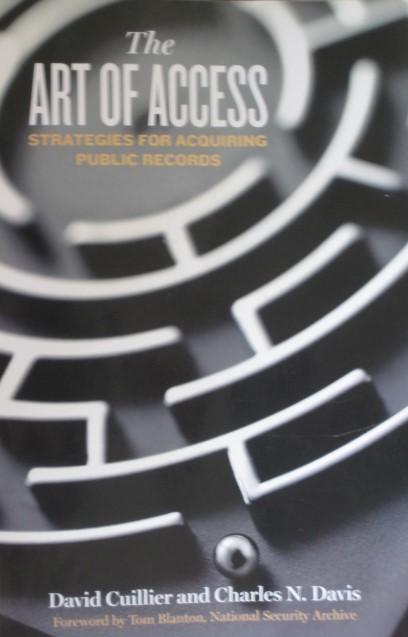
 David Cuillier and Charles N. Davis wrote this easy to read, short and logically formatted text book. Yes, this is a text book. Do not let that dissuade you, think of this as a “how to” on the art of acquiring information using the Freedom of Information Act (FOIA).
David Cuillier, Ph.D., chairman of the Society of Professional Journalists’ National Freedom of Information Committee and an assistant professor of journalism at the University of Arizona, spent many years as a reporter and city editor for assorted newspapers.
Charles N. Davis, Ph.D., executive director of the National Freedom of Information Coalition and former chairman of the Society of Professional Journalists’ is a former newspaper reporter for Lafferty Publications. Davis also co-authored Access Denied: Freedom of Information in the Information Age.
The dedication reads:
“This book is dedicated to the citizens, journalists and government officials who improve their communities by fighting the darkness of secrecy with the tools of transparency.”
The Art of Access, subtitled Strategies for Acquiring Public Records, is more than a text book for budding journalists. Chapter one has a section titled Improve Your Life. It details the information you should have before buying a house, how to perform background checks on people and a fun experiment on how to get hold of your FBI files. Have you ever wondered what information the FBI is collecting about you?
The book also provides some well considered lessons in the art of negotiations. This is information everyone can use every day. There are detailed explanations on how to use the carrot, how to convince busy people to help you in your quest for information. It also details how and when it may become necessary to use the stick, including exactly what citizens have in their arsenal if the need arises.
Every few pages readers will come across “Pro Tips”; these are short blurbs by reporters, attorneys and executives of organizations, people who use the FOIA often and successfully. There are tips on writing request letters, some sample letters that can be copied from the book and web site addresses that have fill in the blank form letters.
The Art of Access is an interesting, quick read. Cover to cover it is only 225 pages, about 60 of those are home work assignments, exercises and appendices, pages a casual readers can speed through with a cursory glance. However, those interested in becoming investigators should pay special attention to those 60 pages.
For aspiring journalists or investigators of any sort, this book is an invaluable tool. It is a map showing where to find information and a guide, showing how to use the data collected. There are sections covering who to contact for assistance and where to look for story ideas. It is also an inspiration, showing what can be accomplished through hard work and dedication.
Side note
I contacted the authors, Charles Davis by email, David Cuillier by phone, and asked both about a short section in chapter two titled Be the Donald, specifically if they would be changing that section in future additions.
Davis, “That is SO funny – saw Dave Cuillier at a conference and we are setting forth on a revision of the first edition, fueled at least in part by our readiness to jettison the Trump references.”
Cuillier, “That sucker is coming out.”
The Art of Access, published by CQ Press, a division of Sage, Washington D.C., 2011. ISBN 978-1-60426-550-7
The Spectator is not presently able to accept comments. Please submit comments to: theuniversaltribune@gmail.com